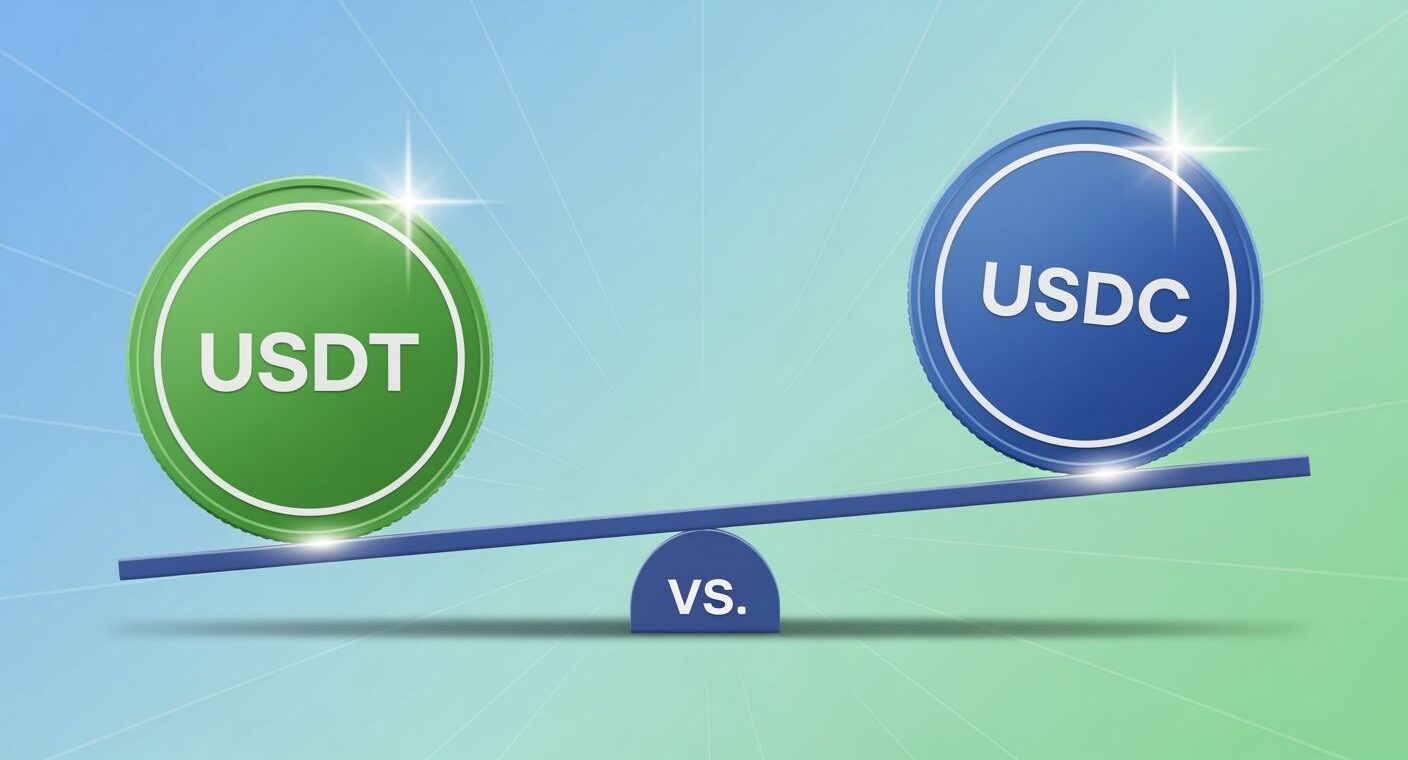
The rise of stablecoins has fundamentally transformed the cryptocurrency landscape, with these dollar-pegged digital assets now serving as the backbone of crypto trading, DeFi protocols, and cross-border payments. As we navigate 2025, the question of safety has become paramount for both retail traders managing their portfolios and institutional investors allocating millions in digital assets. Two titans dominate this space: Tether’s USDT and Circle’s USDC, collectively representing over $180 billion in market capitalization.
The USDT vs USDC debate extends far beyond simple preference—it’s a critical decision that impacts liquidity access, regulatory compliance, and financial security. While both coins promise $1 parity, their approaches to transparency, reserve management, and regulatory oversight differ dramatically. This analysis provides an evidence-driven breakdown of safety factors, defining “safety” through multiple lenses: reserve quality, regulatory compliance, transparency standards, depegging resistance, and censorship risks.
How USDT and USDC Work: Foundational Differences
Understanding the safety profile of USDT versus USDC requires examining their foundational architectures, from issuance models to reserve structures. Both stablecoins operate on collateralized models but differ significantly in their approaches to transparency, regulatory compliance, and operational focus. USDT, launched in 2014, pioneered the stablecoin concept with a focus on maximum liquidity and global accessibility, while USDC, introduced in 2018, prioritized regulatory compliance and institutional adoption from inception.
The reserve management strategies reveal stark contrasts in philosophy. Tether has historically maintained a diversified portfolio including cash equivalents, commercial paper, and secured loans, while Circle has emphasized traditional cash and short-term U.S. Treasury holdings. These differences directly impact each coin’s risk profile during market stress events. Blockchain coverage also varies, with USDT available across more networks but USDC focusing on high-quality, well-audited blockchain integrations.
Regulatory positioning represents perhaps the most significant divergence between these stablecoins. USDC operates under extensive U.S. financial regulations, with Circle holding money transmission licenses and adhering to stringent compliance requirements. Tether, while improving transparency, operates from offshore jurisdictions with different regulatory frameworks. This foundational difference cascades through every aspect of their operations, from audit practices to user accessibility.
| Feature | USDT | USDC |
|---|---|---|
| Launch Year | 2014 | 2018 |
| Primary Issuer | Tether Limited (Hong Kong/British Virgin Islands) | Circle Internet Financial (United States) |
| Reserve Strategy | Diversified portfolio including commercial paper, secured loans | Cash and short-term U.S. Treasury securities |
| Blockchain Coverage | 20+ blockchains including Ethereum, Tron, BSC | 15+ blockchains focusing on major networks |
| Regulatory Focus | Global accessibility, offshore regulation | U.S. compliance, institutional adoption |
| Market Cap (2025) | ~$120 billion | ~$60 billion |
Who Issues USDT and USDC?
The issuing entities behind these stablecoins reveal fundamental differences in structure and regulatory positioning. Tether Limited, registered in Hong Kong and the British Virgin Islands, operates as the primary issuer of USDT across multiple blockchain networks. This offshore structure provides global operational flexibility but also creates regulatory complexity for users in different jurisdictions.
- USDT is issued by Tether Limited, with operations spanning Hong Kong, British Virgin Islands, and subsidiary entities worldwide
- Circle Internet Financial, a U.S.-based financial technology company, issues USDC under comprehensive American financial regulations
- USDT benefits from decentralized operational structure across multiple jurisdictions, reducing single-point regulatory failure
- USDC operates under centralized U.S. oversight with money transmission licenses in multiple states and federal compliance
- Both issuers maintain banking relationships, but Circle’s partnerships focus on established U.S. institutions while Tether works with global banking networks
How Stablecoin Reserves Are Managed
Reserve management practices form the bedrock of stablecoin safety, directly impacting each coin’s ability to maintain its dollar peg during market turbulence. USDC maintains reserves primarily in cash and short-term U.S. Treasury securities, held at regulated U.S. financial institutions with monthly attestations from Grant Thornton. This conservative approach prioritizes liquidity and safety over yield generation, ensuring rapid redemption capabilities even during banking sector stress.
USDT’s reserve structure reflects a more complex investment strategy, historically including commercial paper, secured loans, corporate bonds, and precious metals alongside traditional cash holdings. While this diversification potentially offers higher yields, it also introduces credit risk and liquidity concerns during market dislocations. Tether has gradually shifted toward safer assets following regulatory pressure, but maintains more investment flexibility than USDC.
Third-party verification standards differ significantly between the two stablecoins. USDC publishes monthly attestation reports providing detailed breakdowns of reserve holdings, while USDT releases quarterly reports with less granular detail. Both have faced criticism over audit practices, but USDC’s monthly reporting cycle and use of established auditing firms provides more frequent transparency checkpoints for users and regulators.
Transparency, Auditing, and Regulatory Compliance
Transparency and regulatory compliance represent critical safety factors that differentiate USDT and USDC across multiple dimensions. The frequency and depth of public reporting, third-party auditing standards, and regulatory milestone achievements create distinct risk profiles for users. Circle’s USDC has established monthly attestation reporting through Grant Thornton, providing detailed reserve breakdowns and regulatory compliance updates, while Tether has evolved from minimal disclosure to quarterly reporting with BDO auditing services.
Regulatory licensing achievements showcase the commitment levels to compliance frameworks. Circle has obtained money transmission licenses across multiple U.S. states, maintains federal compliance standards, and achieved MiCA pre-compliance in Europe ahead of regulation implementation. These licenses require ongoing capital requirements, regular examinations, and consumer protection measures. Tether operates under different regulatory frameworks, with varying compliance requirements across jurisdictions where it maintains operations.
- USDC leads in reporting frequency with monthly reserve attestations and detailed asset breakdowns published consistently
- USDT provides quarterly transparency reports showing gradual improvement in disclosure practices over time
- Circle holds comprehensive U.S. money transmission licenses and maintains federal regulatory compliance standards
- Tether operates under offshore regulatory frameworks with increasing cooperation with U.S. and European authorities
- Both stablecoins have achieved significant milestones in third-party auditing, though USDC maintains more frequent reporting cycles
- MiCA compliance preparation shows USDC with earlier preparation timeline compared to USDT’s ongoing assessment
- Public reserve reporting quality demonstrates USDC’s granular asset disclosure versus USDT’s high-level category reporting
Transparency and Audit History Breakdown
The evolution of transparency practices reveals how each stablecoin has responded to regulatory pressure and market demands for accountability. USDC began with monthly attestations from day one, establishing a standard for real-time reserve verification that became industry best practice. USDT’s transparency journey reflects the broader maturation of the stablecoin market, transitioning from minimal disclosure to comprehensive quarterly reporting as regulatory scrutiny intensified.
| Transparency Checkpoint | USDT | USDC |
|---|---|---|
| Audit Frequency | Quarterly reports by BDO | Monthly attestations by Grant Thornton |
| Reserve Detail Level | Category-level breakdown (cash, equivalents, loans) | Granular asset-by-asset disclosure |
| Historical Transparency Issues | 2017-2021 minimal disclosure, NY AG settlement | Consistent reporting since launch, SVB exposure disclosure |
| Regulatory Cooperation | Increased cooperation post-2021, ongoing investigations | Proactive regulatory engagement, licensed operations |
| Public Communication | Limited executive commentary, focus on product updates | Regular executive updates, policy position papers |
Safety Risks: Depegging, Reserve Quality, and Controversies
Historical depegging events provide crucial insights into each stablecoin’s resilience under stress and the effectiveness of their respective safety mechanisms. The March 2023 Silicon Valley Bank collapse created the most significant stress test for USDC, as Circle held approximately $3.3 billion in SVB deposits, causing USDC to trade as low as $0.87 before Federal Reserve intervention restored confidence. This event demonstrated both the risks of concentrated banking relationships and the importance of regulatory backstops for U.S.-based stablecoin issuers.
USDT has faced different but equally significant challenges, including the 2018 controversy over reserve backing, investigations by the New York Attorney General, and periodic liquidity concerns during major market selloffs. The May 2022 Terra/Luna collapse briefly pushed USDT below $0.95 as users fled to perceived safety, though the peg recovered within 24 hours. These incidents highlight how market perception and liquidity depth can impact stability even when reserves remain adequate.
Reserve quality analysis reveals distinct risk profiles that become apparent during crisis periods. USDC’s concentration in traditional banking relationships provides regulatory protection but creates systemic banking sector exposure, as demonstrated during the SVB crisis. USDT’s more diversified reserve structure, including commercial paper and secured loans, offers some protection against traditional banking failures but introduces credit risk from counterparties that may not have the same regulatory backing as U.S. banks.
User exposure during these crises varied significantly based on holding patterns and redemption access. USDC holders with direct Circle accounts maintained redemption capabilities even during the SVB crisis, while secondary market users faced temporary discounts. USDT’s larger trading volume across multiple exchanges provided more exit liquidity during stress events, but questions about reserve accessibility created uncertainty for large redemptions.
Notable Past Crises and How They Were Handled
The response mechanisms employed during major stablecoin crises reveal the operational capabilities and institutional support systems backing each token. These incidents provide valuable precedents for assessing future safety under similar stress conditions.
Circle’s handling of the SVB crisis demonstrated both preparedness and the benefits of regulatory relationships, with clear communication and Federal Reserve coordination helping restore confidence within days. Tether’s crisis management has evolved significantly, with improved communication and reserve adjustments following early controversies.
- March 2023 SVB Crisis: USDC depegged to $0.87, Circle provided daily updates, Federal Reserve support restored parity within 72 hours, demonstrating regulatory safety net effectiveness
- May 2022 Terra Collapse: USDT briefly touched $0.95, Tether published reserve details, peg recovery within 24 hours showed market confidence in backing despite external market chaos
- 2018-2021 Tether Controversies: NY AG investigation revealed reserve deficiencies, $18.5 million settlement, transition to quarterly reporting and improved reserve composition addressed transparency concerns
- 2020 March COVID Selloff: Both stablecoins maintained stability during broader crypto crash, with USDC showing slightly less volatility due to clearer reserve backing disclosure at the time
Current Criticisms and Unresolved Safety Issues
Ongoing safety concerns continue to differentiate USDT and USDC risk profiles, with each facing distinct challenges that could impact future stability. Blacklisting capabilities represent a double-edged safety feature, providing regulatory compliance tools while raising censorship concerns. Both stablecoins maintain address freezing capabilities, but their implementation policies and historical usage patterns differ significantly in scope and transparency.
Government intervention risks vary based on jurisdictional exposure and regulatory positioning. USDC’s U.S.-centric structure provides regulatory clarity but also concentrates political risk in American policy decisions, while USDT’s offshore structure may offer some diversification but creates uncertainty about regulatory cooperation during international disputes. These structural differences become particularly relevant for users in different geographic regions and regulatory environments.
Market Adoption and Liquidity: What Do Users and Institutions Prefer?
Market adoption patterns reveal distinct preferences among different user segments, with trading volume, DeFi integration, and institutional endorsements providing clear indicators of practical safety through liquidity. USDT maintains dominant trading volume across most cryptocurrency exchanges, often representing 60-70% of stablecoin trading pairs, while USDC has captured significant institutional adoption and DeFi protocol integration due to its regulatory compliance profile.
The relationship between liquidity and stability creates a reinforcing cycle where higher adoption leads to deeper markets and more stable pricing during stress events. USDT’s massive trading volume provides superior liquidity for large transactions and during market volatility, while USDC’s institutional adoption creates more predictable demand patterns and higher-quality market makers. Both factors contribute to safety but through different mechanisms.
Geographic adoption patterns also influence safety profiles, with USDT dominating in Asia and emerging markets where regulatory frameworks may be less developed, while USDC shows stronger adoption in North America and Europe where regulatory compliance provides competitive advantages. This distribution affects each stablecoin’s exposure to different regulatory risks and market dynamics during regional crises.
| Adoption Metric | USDT | USDC |
|---|---|---|
| Daily Trading Volume | $50-80 billion average | $15-25 billion average |
| Exchange Trading Pairs | 1,500+ pairs across 200+ exchanges | 800+ pairs across 150+ exchanges |
| DeFi Total Value Locked | $8-12 billion across protocols | $12-18 billion across protocols |
| Institutional Custody | Limited institutional custody options | Broad institutional custody support |
| Payment Integration | Widespread merchant adoption | Growing enterprise integration |
| Geographic Dominance | Asia-Pacific, emerging markets | North America, Europe |
Who Uses Each Stablecoin? Profiles and Trends
User segmentation analysis reveals how different stakeholder groups prioritize various safety factors when choosing between USDT and USDC. These preferences create distinct adoption patterns that reinforce each stablecoin’s market position and influence their respective risk profiles through network effects.
- Retail crypto traders prefer USDT for maximum liquidity access and universal exchange support, prioritizing trading efficiency over regulatory compliance
- DeFi protocol developers increasingly choose USDC for smart contract integration due to clearer regulatory status and institutional backing
- Traditional financial institutions and corporate treasuries favor USDC for its regulatory compliance, monthly reporting, and established auditing standards
- Cross-border payment services utilize both tokens but show regional preferences based on local regulatory environments and banking relationships
- High-frequency trading firms and market makers concentrate on USDT due to superior volume and spread opportunities across global exchanges
- Compliance-focused businesses including licensed exchanges and regulated funds show strong preference for USDC’s transparency and regulatory positioning
Redemption, Accessibility, and Censorship Risks
Redemption mechanisms and accessibility represent critical safety factors that can determine user outcomes during crisis situations or regulatory interventions. Circle offers direct redemption services for USDC holders meeting minimum thresholds, typically $100,000, with same-day processing for verified institutional accounts. This direct relationship provides certainty during market stress but requires compliance with U.S. financial regulations and customer identification requirements.
Tether’s redemption process operates through a more complex verification system with higher minimum thresholds, often $100,000 or more, and longer processing times that can extend during high-demand periods. The offshore structure creates additional complexity for users in different jurisdictions, but also provides some insulation from single-country regulatory actions. Both systems favor institutional users over retail holders, who typically rely on secondary market liquidity for redemptions.
- Circle provides streamlined redemption for verified accounts with clear processing timelines and regulatory protections under U.S. law
- Tether redemption requires extensive verification with variable processing times based on demand and compliance requirements
- USDC benefits from broad institutional custody support making redemption accessible through multiple service providers
- USDT redemption often requires direct relationship with Tether Limited, creating potential bottlenecks during high-demand periods
- Both stablecoins maintain address blacklisting capabilities, but USDC operates under clearer legal frameworks for implementation
- Censorship resistance differs based on blockchain deployment, with both offering options across multiple networks for redundancy
Accessibility and Interoperability on Major Blockchains
Cross-blockchain availability provides crucial redundancy and accessibility options that can prove vital during network congestion or regulatory actions targeting specific blockchains. Both stablecoins have expanded beyond their original Ethereum deployments to offer multi-chain accessibility, though with different strategic priorities and implementation approaches.
| Blockchain | USDT Supported? | USDC Supported? |
|---|---|---|
| Ethereum | Yes (Primary) | Yes (Primary) |
| Tron | Yes (Major usage) | No |
| Polygon | Yes | Yes |
| Arbitrum | Yes | Yes (Native) |
| Solana | Yes | Yes (Native) |
Censorship and Blacklisting: Real-World Cases
Address freezing and blacklisting capabilities represent a fundamental tension between regulatory compliance and censorship resistance, with both USDT and USDC implementing these controls but with different policies and historical usage patterns. Circle has frozen USDC addresses in response to law enforcement requests and sanctions compliance, including notable cases involving Tornado Cash addresses and OFAC-sanctioned entities, demonstrating clear adherence to U.S. regulatory requirements but raising concerns about financial sovereignty.
Tether’s blacklisting practices have been less transparent but equally extensive, with frozen addresses typically related to exchange hacks, law enforcement requests, and compliance violations. The offshore structure creates uncertainty about the legal frameworks governing these decisions, though Tether has generally cooperated with international law enforcement and regulatory authorities. Both systems create precedents that could affect future user access based on changing regulatory environments or geopolitical tensions.
Which Stablecoin Is Truly Safer in 2025? Synthesis and Strategic Insights
After comprehensive analysis across transparency, regulatory compliance, market adoption, and operational resilience, the safety comparison between USDT and USDC reveals a nuanced landscape where “safer” depends critically on user profile, geographic location, and specific risk tolerances. USDC demonstrates superior transparency, regulatory compliance, and institutional backing, making it the safer choice for compliance-focused users, institutional investors, and those prioritizing regulatory clarity. The monthly attestations, clear reserve composition, and U.S. regulatory oversight provide measurable safety advantages.
However, USDT’s massive liquidity advantage, broader accessibility, and operational track record through multiple crisis events demonstrate different but equally valid safety characteristics. The larger trading volume provides superior exit liquidity during stress events, while the diversified geographic and regulatory exposure offers some protection against single-jurisdiction regulatory actions. For users prioritizing maximum liquidity access and global availability, these factors may outweigh transparency concerns.
The synthetic safety profile suggests a portfolio approach may optimize risk management, with USDC serving compliance and institutional needs while USDT provides liquidity and trading efficiency. Geographic considerations remain crucial, with USDC offering advantages in regulatory-friendly jurisdictions while USDT may provide better accessibility in regions with developing regulatory frameworks. Both stablecoins have evolved significantly toward greater safety and transparency, suggesting continued convergence in safety standards.
Key Takeaways and Decision Factors
The optimal stablecoin choice requires careful consideration of individual circumstances, risk tolerance, and intended use cases. These decision factors provide a framework for evaluating personal safety priorities against each stablecoin’s strengths and limitations.
- Choose USDC for regulatory compliance needs, institutional use cases, and situations where transparency and audit frequency are paramount safety factors
- Select USDT for maximum liquidity access, global trading opportunities, and scenarios where exit liquidity during stress events is the primary safety concern
- Consider geographic regulatory environment, as USDC provides advantages in compliance-focused jurisdictions while USDT may offer better access in emerging markets
- Evaluate redemption requirements and minimum thresholds, with Circle offering more accessible direct redemption for qualified users
- Assess censorship risk tolerance, understanding both stablecoins maintain blacklisting capabilities but operate under different legal frameworks
- Monitor reserve composition changes and audit reports, as both stablecoins continue evolving their safety practices and transparency standards